
Description
* For the safety of our animals, we now ship live fish exclusively via FedEx 1Day Service. If your order contains this item, you will only see FedEx 1Day as a shipping option during checkout *
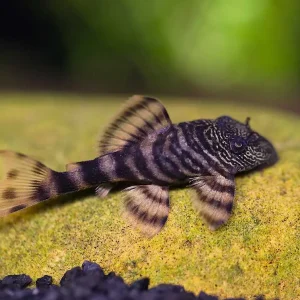
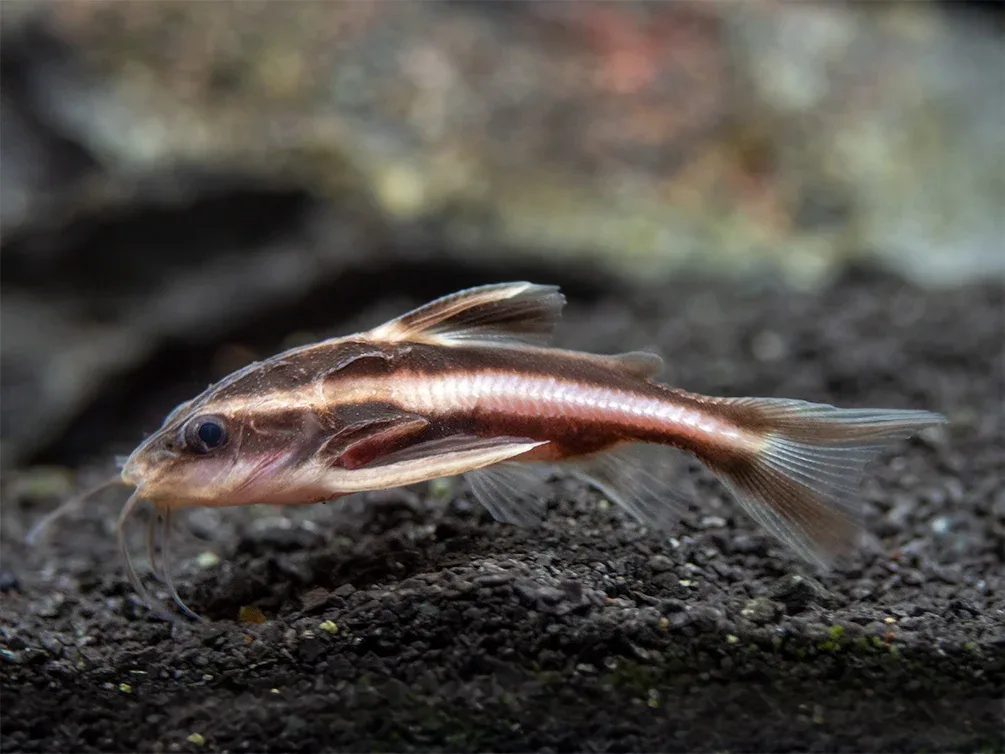
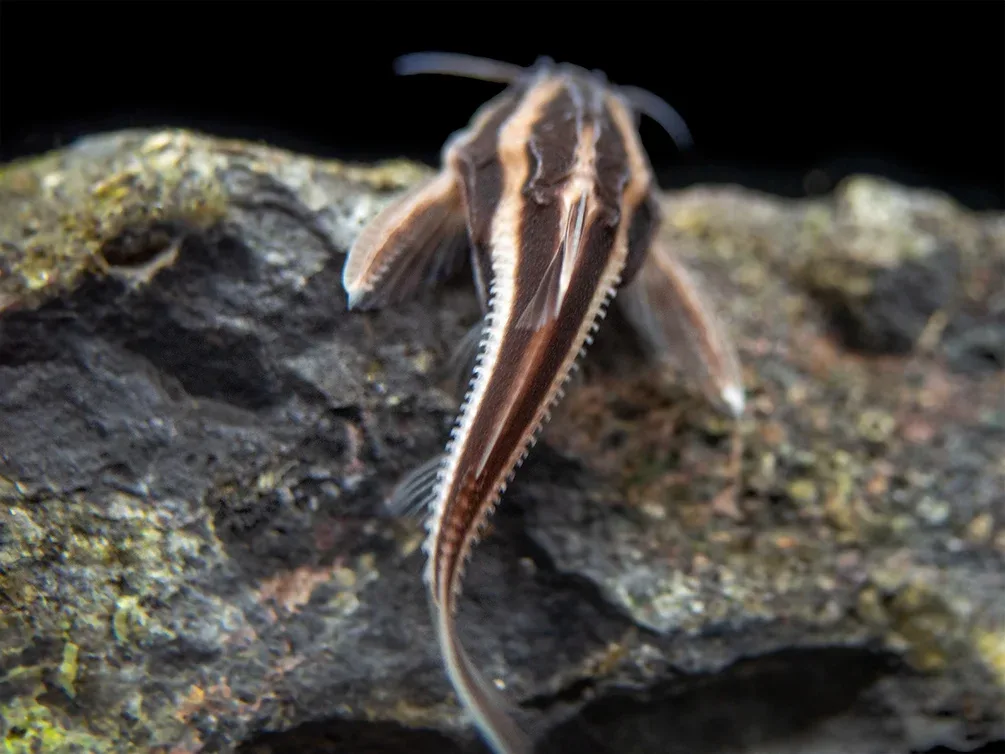
The Striped Raphael Catfish is a longtime favorite for the freshwater aquarium, and we have rare tank-bred specimens!
The Striped Raphael Catfish (Platydoras armatulus, formerly P. costatus) is a medium sized catfish species from the Orinico and Amazon River basins as well as many other waterways throughout much of South America. It has been a very popular aquarium fish for many years due to its hardiness, generally peaceful nature, and attractive markings. It grows too large for the nano aquarium, but is an excellent candidate for the medium or large aquarium, especially Amazon-type setups with cichlids or tetras. This species is also known as the Striped Talking Catfish due to its ability to “croak” when removed from the water. It is a doradid (family Doradidae) catfish whose closest relatives are Wood and Banjo catfish families.
The Striped Raphael Catfish is a somewhat gregarious species, although it is also fine as a single specimen in an aquarium. It is somewhat reclusive and definitely requires ample hiding places in the form of driftwood, pipes, or other crevices. Multiple specimens will sometimes wedge into the same refuge. This fish is not particularly territorial or aggressive, but like most catfish, it will prey on anything small enough to fit in its mouth, such as tiny fish, dwarf shrimp, and fry. It will not bother plants. It is not particularly sensitive, but it prefers fairly calm to moderate water flow. Like many scaleless fish, it will deteriorate from poor water quality and maintenance.
Feeding is very simple for the Striped Raphael Catfish. In the wild, it mainly feeds on small crustaceans and other invertebrates. In the aquarium, it will accept most live, frozen, and dry meaty foods, although some vegetable matter (such as spirulina-rich dry foods) is recommended as well. It is a voracious eater, so care should be taken not to overfeed. Inserting food near the fish’s hiding place is very effective, although it will typically learn to come out of hiding with enthusiasm when food is available.
What We Like About This Fish:
Beautiful black and white markings
Completely peaceful with anything to large to be considered prey
Excellent scavenger
Will not bother plants
Rare tank-bred specimens
RECOMMENDED TANK PARAMETERS:
Temperature: 76° – 86° F (24° – 30° C)
pH: 5.8 – 7.5
KH: 2 – 20 dKH
Minimum tank size: 55 gallons for an individual or small group
CARE GUIDELINES:
Diet: Omnivorous. Will accept most dry, frozen, and live meaty foods
Social behavior: Peaceful, nocturnal, somewhat gregarious
Origin: Tank-Bred, but indigenous throughout much of South America
Average adult size: Up to 9.6 inches (24 cm), although 6 inches (15 cm) is much more likely in the aquarium
Average purchase size: 1 – 1.5 inches (2.5 – 3.8 cm)
All Aquatic Arts brand plants and animals come with a 100% live arrival guarantee, plus free email support!