
Description
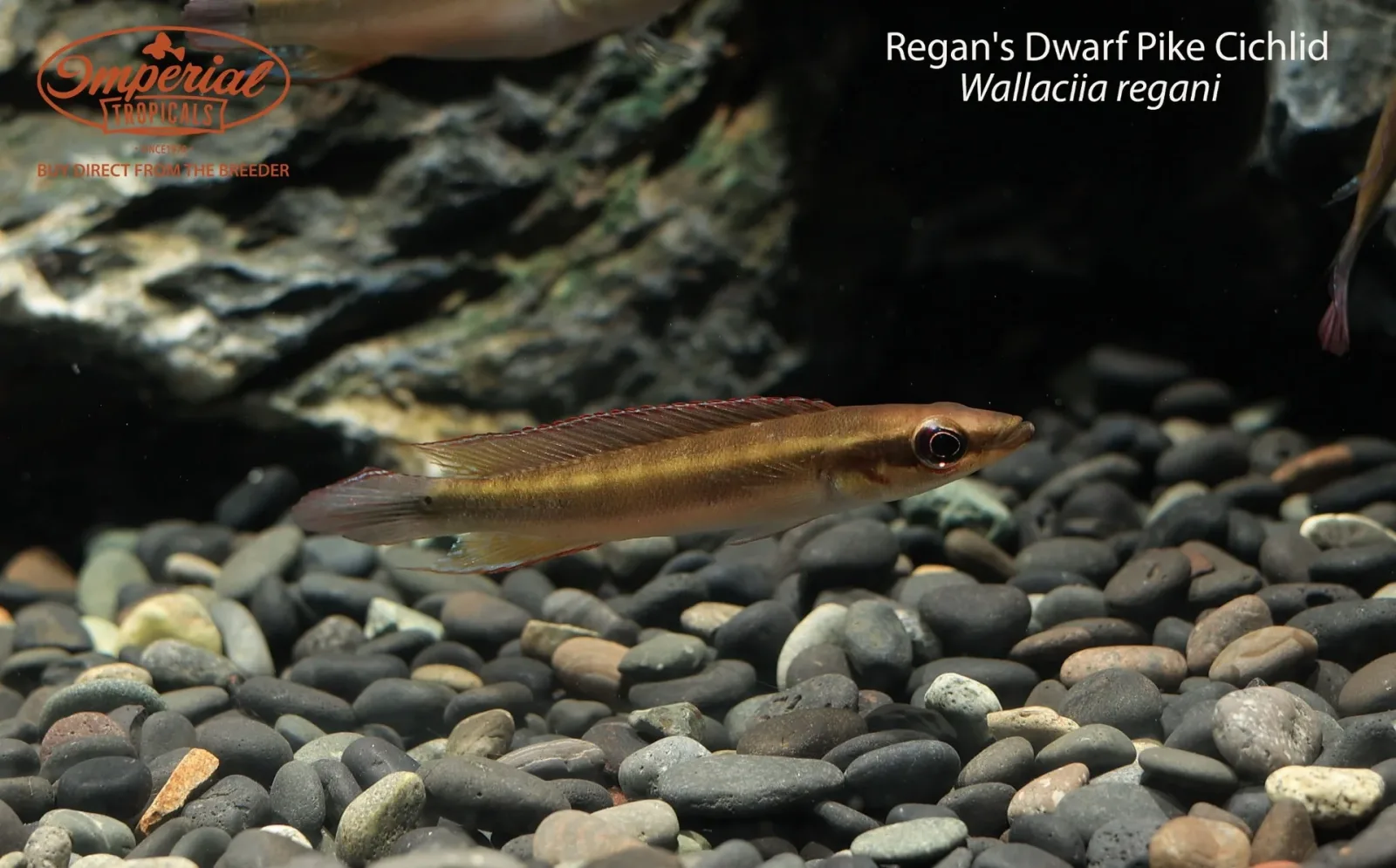
Remarks: Regan’s dwarf pike cichlid (Wallaciia regani; formerly Crenicichla regani) has many other pike cichlids beat in a few areas. They are known to be one of the smallest, most peaceful, and most widespread species of pike cichlid. With their native range being spread throughout the Amazon River basin, they can be found in a variety of habitats. Anywhere from clear waters full of aquatic vegetation to black water shallows filled with botanicals, this dwarf species has made itself at home. Such a wide distribution has made them able to tolerate a range of water parameters with the only requirement being their waters remain at least on the mildly soft and acidic side.
The wide distribution of Regan’s dwarf pike cichlid not only has made them very adaptable, but it also has caused them to become a polychromatic species. What this means is that not only are there numerous different localities with different appearances, but it also means that even among a single spawn, you may find individuals that vary in color and pattern. Such differences have some researchers believing that Regan’s dwarf pike cichlid may actually represent a variety of different, closely related species but this has yet to be confirmed.
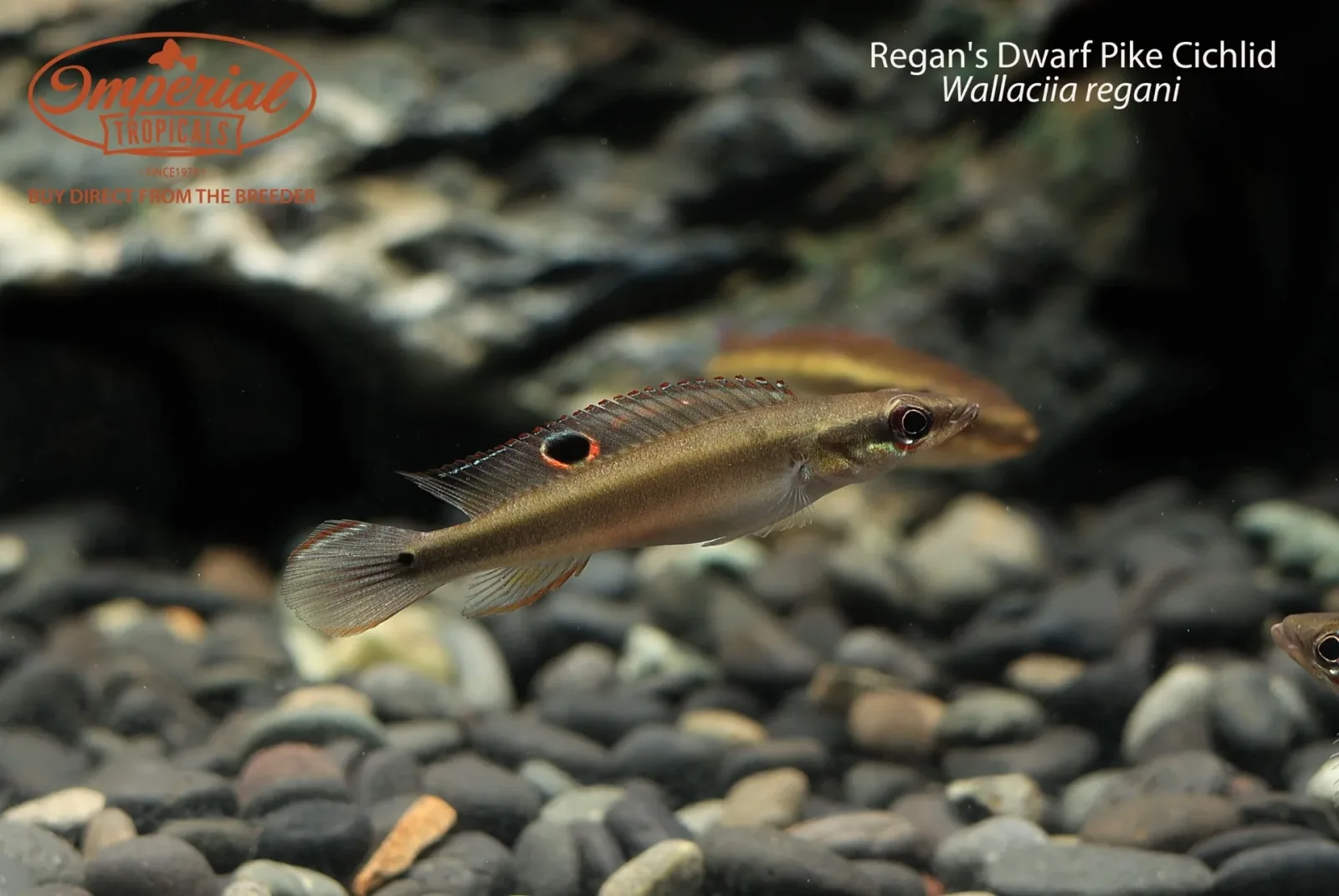
While their polychromatic nature has created some exceptions, there are a few key characteristics that can help you sex your Regan’s dwarf pike cichlids. One of the first visual differences between males and females is that females typically have 1-3 black ocelli (eye-spots) rimmed with white on their dorsal fin. This can be a great indicator when determining the sex of juvenile Regan’s dwarf pike cichlids as it is a marking present even when females are young. If dealing with mature fish, you can further identify which are female by looking at the belly. When ready to spawn, female dwarf pike cichlids will get a yellow or pink hue to their bellies that also become heavily rounded.
Regan’s dwarf pike cichlids are capable of growing up to 5” long, however most top out at about 3” in captivity. Such a diminutive size has resulted in a key difference from their larger relatives when it comes to their social structure. Unlike their far more solitary larger relatives, when given enough space, dwarf pike cichlids can be kept in groups rather than just as a single fish or pair. In fact, some have found that keeping them in groups often leads to stronger pair bonds forming. Their more mellow personalities also make Regan’s dwarf pike cichlids a great candidate for community aquariums. So long as a tankmate is not small enough to fit in the mouths of these pocket-sized predators, they typically are safe. Also keep in mind, being smaller and less aggressive means that overly large or aggressive tankmates should not be kept with your dwarf pikes as they may get bullied or even eaten.
As previously mentioned, while they are small, Regan’s dwarf pike cichlids are still predators. In the wild, they will hunt down tiny fish, crustaceans, and insects to feed on. Within the home aquarium, they will benefit from a varied, carnivorous diet with blood worms and chopped krill being favorites. While most will eventually take to high protein pellet foods, some wild pikes might remain stubborn. You can help wean them off live and frozen foods by gradually mixing pellets/flakes in with each feeding.
Whether keeping a breeding pair or as a member of a community aquarium, Regan’s dwarf pike cichlids are a joy to keep. They are a great option if one wants all the personality of a pike cichlid but are more limited on space. Care for them properly and they are sure to become a fast favorite.