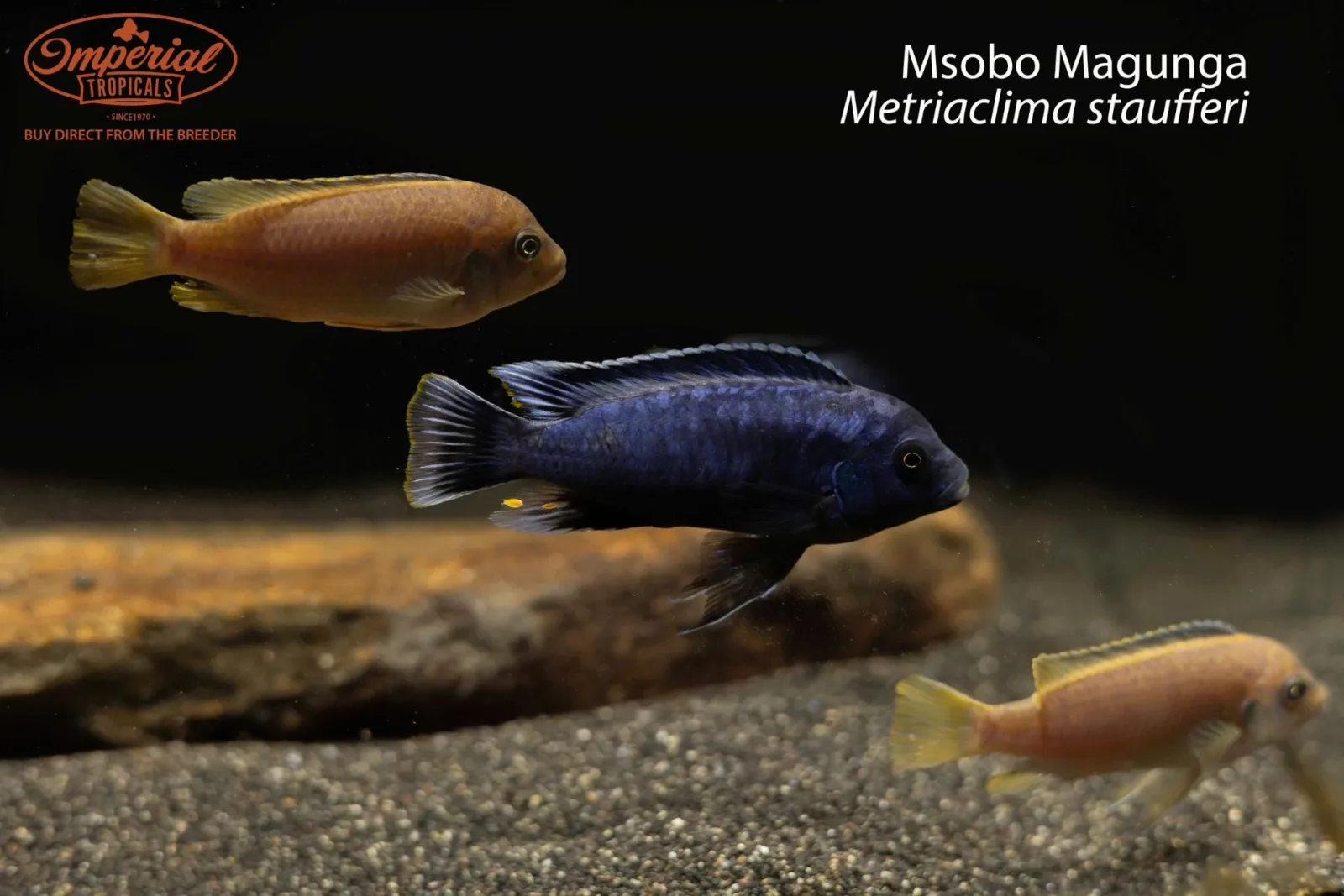
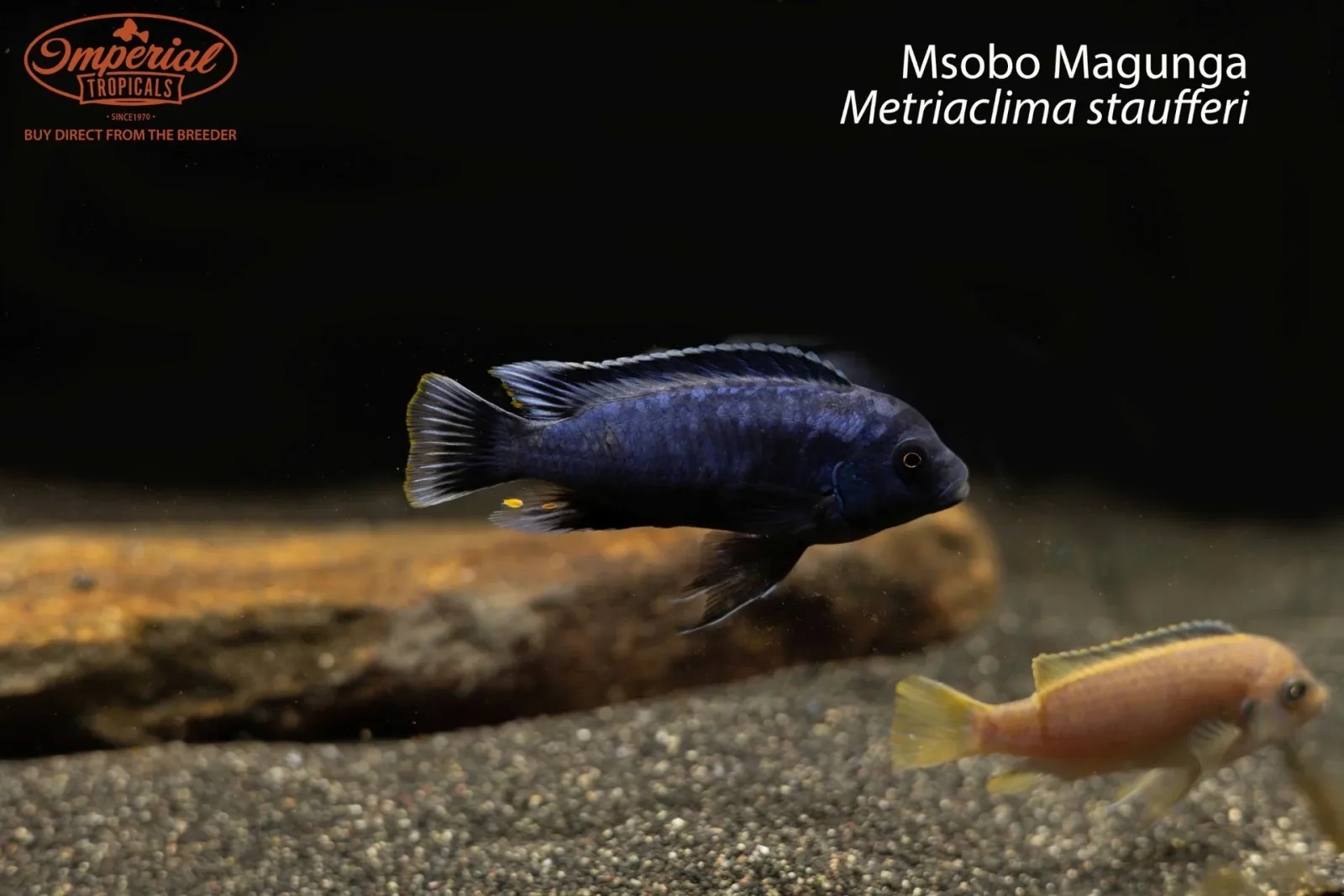

Description
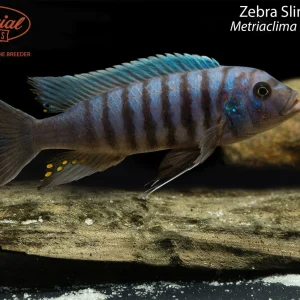
Remarks: Msobo magunga has been given many names, both scientific and common, over the years. It was first given the name Pseudotropheus sp. ‘msobo’ in 1995, then was placed in the Maylandia genus in 1998, then the Metriaclima genus in 2001, then finally got a proper scientific name of Metriaclima staufferi in 2026. Within the hobby, it has been called magunga, deep manda, and deep Tanzania amongst others.
Whichever name you call them by, these mbuna are one of the most beautifully colored when considering both males and females. Msobo magunga go against the usual rule of juvenile and female African cichlids being dull as they shine with yellow or orange color, varying in intensity based on lineage. Males have the nice contrast of black and blue coloration that is darker the more dominant the male is. Some populations show this color as a solid a solid blue body with black details, some are solid black with blue spots, others have horizontal barring. Currently, our captive line is mostly blue with black fins while our wild line has a black base with blue bars.
In the wild, msobo magunga can only be found along the Tanzanian shoreline in the northeastern section of Lake Malawi. There they feed using their specialized, comb-like teeth to comb the filamentous algae on the rocks for any morsels of loose algae, plankton, and cyanobacteria. To avoid Malawi bloat and other digestive problems, captive msobo magunga should be fed a primarily herbivorous diet with vegetarian flake and pellet foods. More protein heavy treats like brine shrimp should remain just that, treats, for the long-term health of these mbuna.
Most of the aggression shown by msobo magunga is directed toward conspecifics so they can be kept with most mbuna that are similarly sized and look nothing like them. If keeping males and females together, to avoid excessive aggression there should be 3-4 females for every male. Providing plenty of rockwork and tank space will also keep things calmer. Whether keeping these mbuna as part of a mbuna community tank or as a breeding project, they are an incredibly rewarding species to keep.