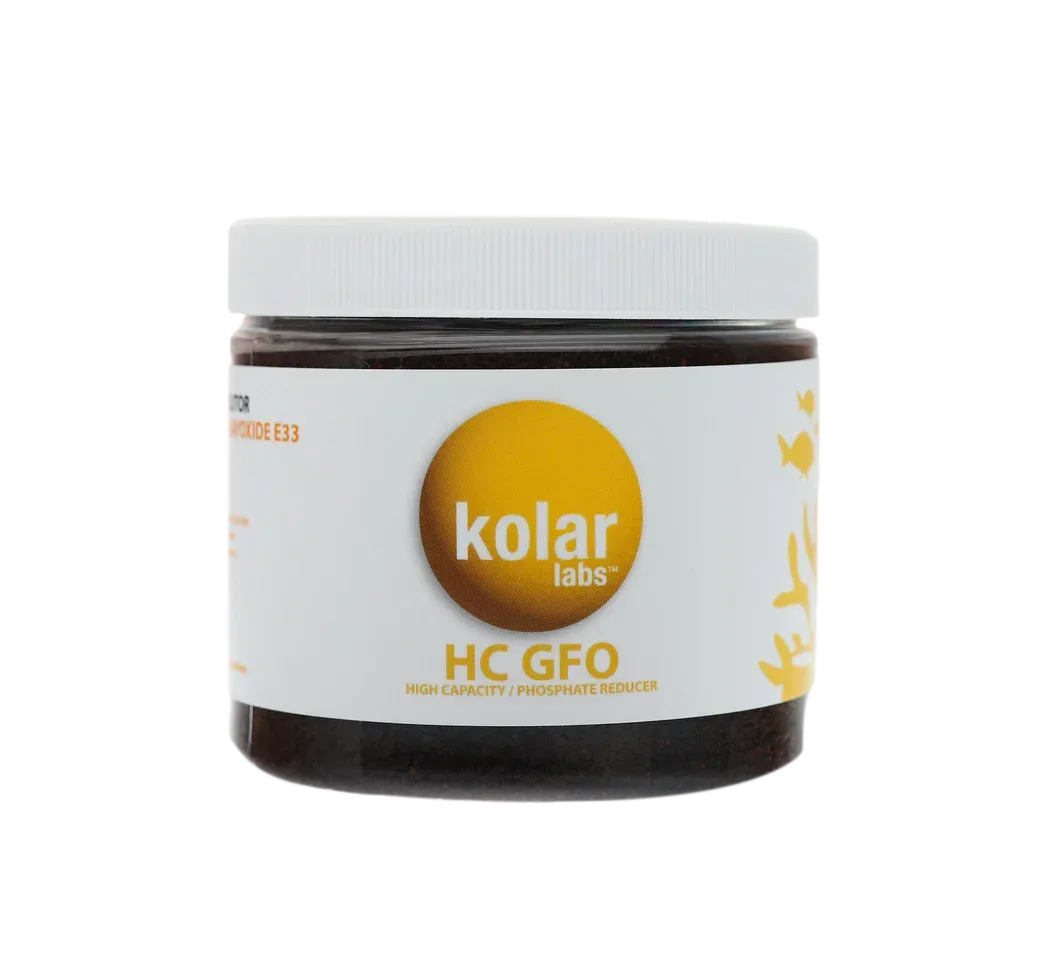

Description
Bayoxide® E33 High Capacity GFO (Granular Ferric Oxide) Phosphate Reducer fights tough algae in fresh and saltwater aquariums by rapidly eliminating their phosphate food source. Left unchecked, high phosphate levels and algae can cause extensive harm to fish, coral and other aquarium life.
Our high-capacity, virgin, drinking water grade HC GFO phosphate reducer adsorbs up to 2x more phosphate than our standard phosphate removal media – and keeps them away longer. The result? Clearer water, a healthier tank environment and less time spent cleaning your aquarium.
Features
Rapidly removes phosphates on contact
Also removes silicates, arsenic and many heavy metals
Reduces and prevents stubborn algae growth
Highest phosphate removal capacity in saltwater for lasting efficacy
Low fines and dust
High hardness and density material resists abrasion, ideal for use in reactors
Creates a healthier environment for aquatic plants and animals
Safe for all fresh and saltwater aquariums, reef tanks, ponds, swimming pools and aquaculture facilities
Best used in reefs and high-end marine fish tanks
Highly effective in reactors, filters socks, canister filters, and filter cartridges
Applications and Uses
Bayoxide® E33 High Capacity GFO quickly and effectively removes phosphates, silicates, arsenic, and heavy metals in all freshwater and marine aquatic environments. Use in freshwater aquariums, planted tanks, koi ponds, natural swimming pools, hydroponics, saltwater aquariums, and reef tanks to control phosphates and reduce algae. Safe for all freshwater and marine fish, invertebrates, plants, and pets. HC GFO’s high hardness results in lower fines and better abrasion resistance in tumbling applications such as media reactors. Bayoxide® E33 HC GFO can have up to 2x the phosphate removal capacity of standard Bayoxide® E33 GFO in saltwater applications.
Detailed Instructions
How to Remove Phosphates from Water and Reduce Algae
1. Place HC GFO media in mesh media bag in filter or sump, or directly in fluidized reactor in recirculating water flow.
2. Initial starting dose = 1 gram/gallon in media bag or fluidized reactor.
Standard maintenance dose = 2 grams/gallon in media bag or fluidized reactor
Start slowly since HC GFO removes phosphates quickly and effectively to avoid shocking your aquarium.
EXAMPLE STARTING DOSE: 8 grams = 1 level tablespoon, 16 Tbsp = 1 cup. 1 cup per 128 gallons to start in media bag or fluidized reactor
EXAMPLE MAINTENANCE DOSE: 1 cup per 64 gallons standard maintenance dose once phosphates are under control in media bag or fluidized reactor
Pro tip: In saltwater, Bayoxide® E33 HC GFO has up to 2x the capacity of standard Bayoxide® E33 GFO, so half dose is possible, and the media has the potential to last 2x as long at full dose.
3. Monitor aquarium phosphate level, add or change media when levels start to rise, or if algae increases. Sometimes the algae consume so much phosphates that test shows low levels while algae growth is still present. After the first 2-3 weeks, continue increasing the amount of HC GFO until algae is controlled.
4. For optimal effectiveness, do not allow overall phosphate levels to test above 0.05ppm. Test water coming directly from the phosphate reactor for phosphates. If any phosphates are present, HC GFO should be increased or replaced.
5. Pre-filter water going into the reactor, and water going out.
EXAMPLE: Filter sock on effluent to trap fines, especially with new media.
Pro tip: Remove all sponges before and after media in reactors and replace with plastic mesh to prevent clogging. Add small check valve to pump side of water line/keep return line submerged to prevent back siphoning into pump in a power cut.
6. Rinse all new media and discard discolored water from rinsing before use.
Pro tip: Use bucket full of tank water and submerge pump and reactor. Run pump with return line running to drain until discoloration stops, then return line back into bucket. Run for a few minutes, checking for proper fluidization. Check for air bubbles or pockets, and gently tap or tilt reactor to eliminate them. Return pump and reactor to sump or tank together.
7. Check weekly for good flow and fluidization. If clogged, dump reactor contents into 5-gallon bucket with tank water, stir and pour off debris. Media can then be returned to reactor in part or whole.
Pro tip: Use this technique when changing media, and save approx. 1/4 of old media to mix into new media, keeping bacterial cultures stable to prevent bacteria or algae bloom from media change. If used in canister filter, use micron bag to hold HC GFO preferably in thin layers to keep good flow, and reduce channeling through media.
8. If any negative coral reaction is noticed after new or changed media, reduce the amount by half. Dropping phosphates too quickly can cause shock. Once established, overdose is unlikely and phosphates will not leach back into the system.
Press Release/Blog entries
Press Release
Resources
Product Flyer
Laxness US Aquaria Brochure